
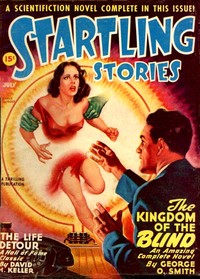
Dream's end by Henry Kuttner
Let's set the scene. It's 1947, and Paul Ennis is an ordinary guy with an ordinary life. That is, until he finds a weird, silvery machine in his apartment that wasn't there before. When he touches it, he gets flashes of a future world—a world of advanced technology and strange landscapes. This is just the start of his problems.
The Story
The machine, called a 'dreamer,' belongs to a man named Thordred, who lives thousands of years in the future. Thordred uses it to have incredibly vivid, sustained dreams. And Paul Ennis, his wife, his city—all of it—is just the setting for one of these dreams. Thordred is getting bored and plans to end the dream, which would wipe Paul and his entire reality out of existence. Paul's struggle isn't against a monster or an army; it's against an idea. His whole fight is to prove, to himself and to the dreamer, that he is real and deserves to keep existing. He has to find a way to reach into the future and make contact with the man who thinks he's just a figment of imagination.
Why You Should Read It
What grabbed me wasn't just the sci-fi premise, but the sheer, quiet panic of Paul's situation. Kuttner writes this personal crisis so well. You feel Paul's frustration as his wife and friends dismiss his fears, and his desperation as the evidence mounts that he might be right. The story moves fast, but it leaves room for those chilling moments of doubt. It's less about ray guns and more about the horror of losing your sense of self. For a story written over 70 years ago, the central question—how do we know what's real?—feels incredibly fresh.
Final Verdict
This is a classic for fans of old-school science fiction that prioritizes big ideas over special effects. If you like the 'twilight zone' style of storytelling, where one bizarre change shakes a person's world, you'll love this. It's also a great pick for anyone who enjoys philosophical puzzles wrapped in a quick, entertaining story. Don't go in expecting a long epic; go in for a brilliant, compact shot of paranoia that will stick with you long after the last page.
This book is widely considered to be in the public domain. It is available for public use and education.
Emily Hernandez
1 year agoFrom a researcher's perspective, the step-by-step breakdown of the methodology is extremely helpful for students. A perfect balance of theory and practical advice.
Margaret Smith
11 months agoIt’s refreshing to see such a high standard of digital publishing.
Susan Johnson
7 months agoI decided to give this a try based on a colleague's recommendation, the breakdown of complex theories into digestible segments is masterfully done. The price-to-value ratio here is simply unbeatable.
James Garcia
1 year agoUnlike many other resources I've purchased before, the data points used to support the main thesis are quite robust. Simple, effective, and authoritative – what else could you ask for?




John Gonzalez
7 months agoI've been looking for a reliable source on this topic, and it addresses the common misconceptions in a very professional manner. I'll be citing this in my upcoming project.