
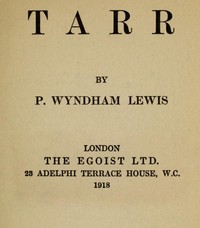
Tarr by Wyndham Lewis
Let me paint you a picture of Tarr. It's pre-World War I Paris, a city buzzing with artists and ideas. Our guide through this world is Frederick Tarr, an English painter. He's all sharp angles and theories, a man who prides himself on his intellect and looks down on what he calls 'sentimentality.'
The Story
Tarr is engaged to Bertha, a German woman who is kind, devoted, and everything he thinks he should want in a 'civilized' partnership. But then he meets Anastasya, a fierce, independent Polish artist who embodies the wild, creative spirit he claims to admire. Tarr spends the entire novel ping-ponging between these two women, trying to apply his cold, analytical philosophy to the chaos of love and desire. He makes grand pronouncements about art and life, all while his personal world falls into hilarious and pathetic disarray. The plot follows his increasingly convoluted attempts to manage these relationships without ever actually admitting he has feelings.
Why You Should Read It
I picked this up because I love novels about messy artists, but I stayed for Lewis's incredible voice. This isn't a warm book. It's prickly, satirical, and often uncomfortable. Lewis doesn't want you to like Tarr; he wants you to see right through him. The genius is in the dialogue—characters have long, winding conversations that are both pretentious and revealing. You get the sense that Lewis, a painter himself, was exorcising some demons about the art world. Reading it feels like being a fly on the wall in a smoky café, listening to the most brilliantly arrogant and flawed people you've ever met argue about life.
Final Verdict
Perfect for readers who don't need a 'likeable' hero to be fascinated. If you enjoy the intellectual satire of someone like Evelyn Waugh but want something grittier and more modernist, give Tarr a shot. It’s also a must if you're interested in the explosive creative period just before the First World War. Fair warning: it demands your attention. The sentences are dense, the ideas come fast, and the humor is bone-dry. But if you stick with it, you'll find a uniquely savage and unforgettable portrait of a man trying—and failing spectacularly—to think his way out of being human.
The copyright for this book has expired, making it public property. Use this text in your own projects freely.
John Miller
10 months agoExactly what I was looking for, thanks!
Charles Perez
1 year agoThe digital index is well-organized, making research much faster.
Kimberly Martin
2 months agoThe layout of the digital version made it easy to start immediately, the formatting on mobile devices is surprisingly crisp and clear. I appreciate the effort that went into this curation.
Emily Harris
1 year agoHaving followed this topic for years, I can say that the way the author breaks down the core concepts is remarkably clear. A rare gem in a sea of mediocre content.
Karen Rodriguez
7 months agoExtremely helpful for my current research project.