
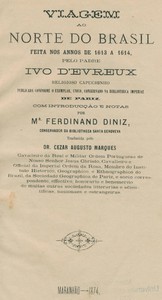
Viagem ao norte do Brazil feita nos annos 1613 a 1614, pelo Padre Ivo D'Evreux
In 1613, French Capuchin friar Yves d'Evreux set sail for Maranhão in northern Brazil. His mission, backed by the French crown, was clear: establish a French colony and convert the indigenous Tupinambá people to Christianity. His journal, written as a report for his king, chronicles the two years he spent living among them.
The Story
This isn't a novel with a traditional plot, but the narrative tension is real. Father Ivo documents everything—the lush, overwhelming landscape, the intricate social structures of the Tupinambá, and his daily struggles. We see him trying to learn the language, participating in rituals (often with deep discomfort), and constantly debating with village leaders. The core "story" is his persistent, often failing, effort to replace their complex spiritual beliefs with his own. He describes their customs in vivid detail, sometimes with admiration for their community, other times with horror at practices he considers pagan. The journal ends with the precarious French settlement on the brink, leaving you with a sense of a fragile, unresolved encounter.
Why You Should Read It
What grabs me is the raw honesty. Father Ivo isn't a neutral anthropologist; he's a man with a firm agenda, and his biases are right there on the page. That's what makes it so valuable. You're not getting a cleaned-up history lesson. You're getting the confused, earnest, and conflicted thoughts of the man living it. Reading his detailed notes on Tupinambá life—from warfare and cannibalism to family bonds and agriculture—feels like looking over his shoulder. It’s a primary source that doesn't give you answers but throws you into the messy questions of colonization, faith, and human difference.
Final Verdict
This book is perfect for readers who love immersive primary sources and aren't afraid of a challenging perspective. If you enjoyed the directness of Bernal Díaz's account of conquering Mexico or the observational depth of early explorer logs, you'll find this fascinating. It's not a light read, but it's a profoundly gripping one. You need to come with patience and critical thinking, ready to read between the lines of a 17th-century priest's report to uncover a pivotal moment of contact. For anyone curious about the real, unvarnished first chapters of cross-cultural encounter in the Americas, this is an essential and startling window.
There are no legal restrictions on this material. Use this text in your own projects freely.
Jessica Thomas
11 months agoFrom a researcher's perspective, the way the author breaks down the core concepts is remarkably clear. A solid investment for anyone's personal development.
George Miller
2 months agoSolid information without the usual fluff.
Jessica Garcia
9 months agoIf you're tired of surface-level information, the evidence-based approach makes it a very credible source of information. An excellent example of how quality digital books should be formatted.
John Moore
11 months agoA must-have for graduate-level students in this discipline.


Michael Taylor
10 months agoOne of the most comprehensive guides I've read this year.