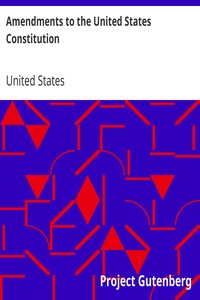
Amendments to the United States Constitution by United States
Let's be clear: this isn't a novel. There's no main character, unless you count "We the People." The plot is the slow, grinding, and sometimes explosive process of a country trying to live up to its own promises.
The Story
The book starts with the first ten amendments, the Bill of Rights, which were basically a peace treaty between the founders who wanted a strong government and those who were terrified of it. From there, each new chapter (amendment) responds to a national crisis or a changing conscience. The Civil War amendments (13th, 14th, 15th) try to rebuild the country and define citizenship after slavery. The 19th Amendment comes after decades of protest. The plot twists are wild: the 18th Amendment bans alcohol, and the 21st Amendment just a few years later admits that was a huge mistake and reverses it. The story ends, for now, with the 27th Amendment about congressional pay—a proposal that took over 200 years to finally get ratified. The through-line is constant tension between the original rules and the need for new ones.
Why You Should Read It
You should read it because it cuts through the noise. It's the source code. When people argue about rights, this is what they're arguing about. Reading the amendments in order is powerful. You see the direct line from the 14th Amendment's "equal protection" clause to the arguments for marriage equality today. You realize that the right to vote wasn't given once; it had to be won again and again for different groups. It makes history feel less like dates and more like a live conversation we're still having. It’s surprisingly dramatic—each one represents a win, a compromise, or a correction that someone fought for, sometimes for generations.
Final Verdict
This is for anyone who's ever been in an argument about politics and wanted to go back to the original text. It's perfect for curious new voters, for people who want to understand the legal roots of today's headlines, and for anyone who likes stories about big ideas. It's not a beach read, but it's one of the most important books on your national bookshelf. Keep it nearby. You'll reach for it more than you think.
This text is dedicated to the public domain. It is available for public use and education.
Thomas Miller
2 months agoIt’s rare to find such a well-structured narrative nowadays, the logic behind each conclusion is easy to follow and verify. A refreshing and intellectually stimulating read.