
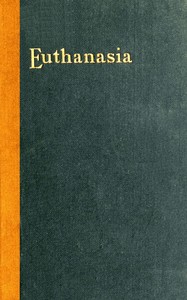
Euthanasia : or, Medical treatment in aid of an easy death by William Munk
Published in 1887, William Munk's Euthanasia: or, Medical Treatment in Aid of an Easy Death is a historical document that feels both distant and strikingly relevant. Dr. Munk, a respected physician, wrote this not for the public, but for his fellow doctors. In an age obsessed with scientific progress and often brutal medical interventions, he made a quiet, radical case: that a doctor's duty includes ensuring a peaceful death.
The Story
There's no traditional plot with characters. Instead, Munk outlines a philosophy and a practical method. He defines 'euthanasia' in its original Greek sense—a 'good death'—focusing on relief from physical and mental anguish. The book is a manual. He details how to assess a patient's final stage, recommends treatments (like carefully managed opiates to soothe pain and anxiety), and stresses the importance of comfort measures: a warm room, a clean bed, the presence of loved ones. He argues against pointless, distressing treatments that only prolong suffering. The core narrative is the shift in thinking he advocates: from fighting death at all costs to managing the journey toward it with dignity.
Why You Should Read It
Reading this today is a profound experience. You're peeking into the mind of a Victorian doctor who, amidst the era's formality, expressed deep empathy. His prose is clear and compassionate. What moved me wasn't a dramatic story, but the quiet humanity in his instructions. When he writes about letting a dying patient have a sip of brandy or ensuring their hand is held, it transcends its time. It challenges our modern assumptions about the past, showing that the debate over end-of-life care isn't new. It also makes you reflect on how far we've come—and how much we still struggle with the same central question: what does it mean to die well?
Final Verdict
This isn't a book for someone looking for a light narrative. It's perfect for readers curious about medical history, ethics, or social attitudes toward death. If you've ever wondered how doctors before our time handled life's final chapter, Munk provides a direct, unflinching answer. It’s a short, sobering, and ultimately humane read that stays with you, a reminder that compassion in medicine is a timeless pursuit.
This is a copyright-free edition. It is now common property for all to enjoy.
Patricia Jones
4 months agoI started reading this with a critical mind, the way it handles controversial points with balance is quite professional. Thanks for making such a high-quality version available.
Sarah Thompson
1 year agoThe clarity of the concluding remarks is very professional.
Karen Martinez
7 months agoI found the author's tone to be very professional yet accessible, the critical analysis of current industry standards is very timely. Finally, a source that prioritizes accuracy over hype.
Matthew Perez
3 weeks agoA must-have for graduate-level students in this discipline.






Emily Brown
2 years agoI stumbled upon this title during my weekend research and the language used is precise without being overly academic or confusing. Truly a masterpiece of digital educational material.