
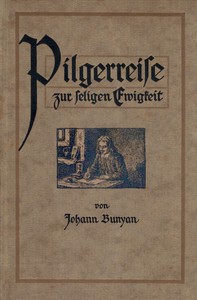
Pilgerreise zur seligen Ewigkeit by John Bunyan
John Bunyan's 'Pilgerreise zur seligen Ewigkeit'—better known in English as 'The Pilgrim's Progress'—is one of those foundational books you've probably heard of but might not have picked up. Written in the 1600s while Bunyan was in jail for his beliefs, it's more than a religious allegory; it's a gripping, imaginative map of the human struggle for purpose.
The Story
The plot is straightforward in the best way. A man named Christian reads a book (the Bible) and realizes he's living in a place called the City of Destruction. Terrified, he sets out on foot to find the Celestial City. His journey is the whole book. He meets friends like Faithful and Hopeful, and foes like the smooth-talking Mr. Worldly Wiseman who tries to convince him to take an easier path. The landscapes are mental and emotional states made physical. He falls into the Slough of Despond (a bog of his own despair), passes through the Valley of the Shadow of Death, and gets captured and beaten down by Giant Despair in Doubting Castle. It's a relentless, episode-by-episode battle where the terrain itself is the enemy.
Why You Should Read It
You don't have to share Bunyan's specific faith to feel the power here. This book is about the cost of commitment. Christian leaves his family and home because he believes there's something more true. Every character he meets represents a different voice we all hear: cynicism, false comfort, pride, or sheer terror. The genius is how Bunyan turns an internal crisis into an external adventure. When Christian fights the monster Apollyon, you're not reading a theology lesson; you're reading a fantastic, tense battle scene about resisting your worst impulses. It’s surprisingly fast-paced and visual. Bunyan had a wild imagination, and he makes abstract ideas feel as real and dangerous as a monster in a dark valley.
Final Verdict
This is a book for the seeker and the storyteller. If you've ever felt restless, like there must be more to life than the daily grind, you'll see yourself in Christian's desperate journey. It's also perfect for fans of classic adventure tales and allegory—think of it as a darker, more philosophical precursor to something like 'The Lord of the Rings,' where the journey changes the traveler. The language in this German translation is classic but clear. Give it the first few chapters. Let yourself get lost in the Vanity Fair or sweat it out in the Valley of Humiliation. You might just find it's one of the most compelling 'road trips' ever written.
This book is widely considered to be in the public domain. You are welcome to share this with anyone.
Susan Harris
1 year agoThis is now a staple reference in my professional collection.
Daniel Johnson
1 year agoI came across this while browsing and the atmosphere created is totally immersive. I couldn't put it down.
John Thompson
7 months agoSimply put, the clarity of the writing makes this accessible. Exceeded all my expectations.
Brian Davis
4 months agoEnjoyed every page.







Paul Martin
2 months agoRight from the opening paragraph, it manages to maintain a consistent flow even when discussing difficult topics. A refreshing and intellectually stimulating read.