1

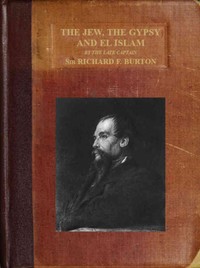
The Jew, The Gypsy and El Islam — Context and Discussion
(0 User reviews)
3267
Project Gutenberg
2018
Not confirmed
Islam; Romanies; Jews
Readers of public-domain and historical texts
Project Gutenberg digital edition
en
Edition facts
Words
88,244
Reading time
384 min
Text sections
13
Before opening The Jew, The Gypsy and El Islam — Context and Discussion, the edition data offers a quick orientation: 88,244 words, 6 hr 24 min estimated reading time, and 13 detected text sections.
The text analysis averages about 21.2 words per sentence, while the detected sections provide another way to judge how the source is divided.
Project Gutenberg metadata also associates the work with “Islam,” connecting these edition facts with the source record’s subject description.
Source:
Project Gutenberg record #57208
This editorial note examines Sir Richard Burton's posthumous collection of essays on Jews, Romanies, and Islam, focusing on his distinctive diction, comparative method, and the editorial framing by W. H. Wilkins. Observations are drawn from the preface and excerpts on Gypsy linguistics.
Editorial Edition Score
4.8/5
★★★★★
★★★★★
Calculated from edition completeness, EPUB availability, text structure and catalogue metadata. Not a user rating.
How this score is calculated
- Description quality20 pts
- Title & short description10 pts
- Source metadata20 pts
- Text length15 pts
- Chapters / structure15 pts
- EPUB file integrity20 pts
Total of 100 points, scaled to a 2.5-5.0 range. Editions with an empty description or a missing EPUB file are not scored.
Edition quality
Read the Text
es of atrocities almost unequalled for merciless savagery. The functions they discharged in mediæval society were, in reality, of the most valuable kind; but so dense was the ignorance, and so inveterate were the prejudices of the age, that towards the close of the thirteenth century upwards of 13,000 Israelites were banished from England in one day; just as two hundred years later 500,000 were expelled from Spain, 150,000 from Portugal, and an indefinite number were cast out of France. For a period of three centuries successive sovereigns refused to accord permission to the Jews to worship Almighty God within the English realm; nor was it until the Protectorate of Cromwell that a synagogue was allowed to be erected in London.
“In works of fiction, in the drama, and in daily life the name of Jew has become a byword and a reproach, and an explanation of this is to be sought for rather in the malignity of religious prejudice than in the actual conduct of the people who have been visited with so much opprobrium. Their virtues are their own, but their faults are the fruit of eighteen centuries of outlawry and oppression. Under such treatment archangels would have become depraved. In the history of the whole world there is nothing which in any degree resembles the systematic persecutions, the barbarous cruelties, the cowardly insults, the debasing tyranny to which the Jewish race has been exposed. That it was not degraded to the level of the African negroes, or absolutely obliterated from the face of the earth, is only another proof of its wonderful vitality and of the indestructible elasticity of the national character.[12] In spite of all these centuries of oppression and repression, its representatives are still found, not merely among the monarchs of finance, but among the royalties and aristocracies of genius. Every one must remember the passage in _Coningsby_ in which Mr. Disraeli enumerates the illustrious Jews who are occupying, or have occupied, the foremost rank in arts, letters, statesmanship, and military science--Count Cantemir in Russia, Senor Mendizelal in Spain, and Count Arnim in Prussia; Marshals Soult and Massena, Professors Neander, Regius, Bearnary, and Wohl; the composers Rossini, Mendelssohn, and Meyerbeer (not to mention Offenbach); Rachel the actress; Pasta, Grisi, and Braham the vocalists, Spinoza the philosopher, and Heine the poet; to which list he might have added the names of some of the most distinguished of living French and English celebrities.[13] And though we have forgotten Xapol and Gondomar, Yahuda Halevi, and Aviabron, alias Solomon ben Gabriel, few of us can ignore the Rothschilds and Goldsmids, the Ricardos, Rouhers, and Torlonias, now become household words in Europe.
“That in all countries the Jews, on the other hand, should evince a preference for sordid pursuits, and follow them with an eagerness and tenacity worthy of employment in more generous and elevated callings, must also be admitted. William Abbott, in his outspoken and earnest but narrow-minded way, advanced this plea upon one occasion in the House of Commons, in resistance to a motion to relieve all persons professing the Jewish religion in England from the civil disabilities under which they then laboured. He was replied to by Macaulay in a speech as eloquent in terms as it was irresistible in logic.
Sir Richard Burton’s The Jew, The Gypsy and El Islam, edited posthumously by W. H. Wilkins, opens with a preface that immediately signals the volume’s provenance: the manuscript was one of many left on the rough deal tables of Burton’s Trieste study. Wilkins describes Burton’s habit of working on several books simultaneously, moving between piles of notes when one project stalled. This editorial note attends to the authorial choices visible in the surviving text—particularly Burton’s diction, his comparative method, and the way his voice emerges through scholarly dispute.
Burton’s Lexicon of Dispute
Burton’s prose in the Gypsy essay is marked by a combative precision. He dismisses the “Tamerlane tenet” of popular belief with a phrase that carries both erudition and impatience. When discussing M. Franz Miklosich, he notes the scholar’s “only reproach” is finding Slavism everywhere—a criticism that is itself a reproach. Burton’s vocabulary leans toward the concrete and the sensory: he describes the Romá as “sturdy vagabonds” rather than nomads, and notes that the Rumelian wanderer has “more than forty words for his tent and the implements of his trade.” Such word choices ground his argument in observable detail rather than abstraction.
The Comparative Frame
Burton’s method is relentlessly comparative. He draws parallels between Gypsy speech and the “Thieves’ Latin” of other bilingual groups, citing Scottish Lowlanders who insert French, Gaelic, Welsh, and Irish words to make their English unintelligible. He compares the Gypsies’ linguistic conservatism to that of “the wandering Arab and the Turkoman.” The essay on the Jews—though less fully excerpted—likely employs a similar tactic, placing Jewish communities alongside other diasporic groups. This comparative instinct is not merely academic; it reflects Burton’s own experience as a traveler and translator, and it shapes the reader’s sense of the interconnectedness of the three subjects.
The Editor’s Hand
Wilkins’s preface is itself a document of authorial choice. He explains that the manuscripts were “finished to all intents and purposes, and only required final revision or a few additions.” This framing invites the reader to consider what Burton might have revised. Wilkins also notes that Lady Burton suppressed some works; the survival of these essays is thus contingent on editorial decisions. The preface’s own diction—calling Burton a “voluminous writer” and describing the study’s “rough deal tables”—creates a physical image of the author at work. The editor’s voice is deferential but not invisible, and his choices affect how we read the essays.
Linguistic Detail as Evidence
Burton’s argument about Gypsy origins hinges on linguistic detail. He cites M. Paspati’s observation that the Rumelian wanderer has many words for tent and implements, and he uses Miklosich’s documentary evidence—donation instruments from 1386-87—to refute the Tamerlane theory. Burton is attentive to the way language changes: he notes that the farther east one goes, the more the Gypsy tongue degrades, but argues that this is because of contact with other dialects. His own prose mirrors this attention: he uses terms like “Játaki” and “argot” with precision, and he is careful to distinguish between “sturdy vagabonds” and “true nomads.” The reader is left with a sense of Burton as a scholar who trusts philology as a tool for historical reconstruction.
Readers approaching this volume should attend to the interplay between Burton’s original voice and Wilkins’s editorial framing. The essays are not finished treatises but working documents, shaped by Burton’s habits of composition and by the decisions made after his death. The diction is sharp, the comparisons are wide-ranging, and the linguistic evidence is treated as a key to cultural history. This is a book that rewards careful attention to its words.
There’s something tender about how Burton’s essays hold contradictions—his empathy for outsiders, his thorny judgments—without trying to smooth them over. It reminded me of sitting with an old friend’s letters, not needing answers. That same gentle, wandering honesty lingers in The Complete Essays of Charles Dudley Warner — Inside the Classic, where observation feels like company, not argument. I think of both as quiet rooms you can return to.
There are no reviews for this eBook.
There are no comments for this eBook.
Reader reflection
Take a moment to reflect on this book
Create a short personal record of your experience with this book.
Your progress
0
/
10
2
How much did you enjoy the reading experience?
3
Would you recommend this book to another reader?
4
How easy was the book to follow?
5
Did any part of the book stay with you emotionally?
6
Was the book easy to understand?
7
Did the story or argument move comfortably?
8
What was the strongest part of the book?
9
Which lesson or insight stayed with you?
10


![Cover of Pebbles on the shore [by] Alpha of the plough — Reading Companion](https://eommi.com/storage/media/covers/pg10675.jpg)