1

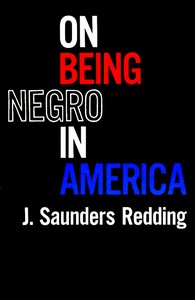
On Being Negro in America — Context and Discussion
(0 User reviews)
46
Project Gutenberg
2020
Not confirmed
United States -- Race relations; African Americans -- Race identity; Redding, J. Saunders (Jay Saunders), 1906-1988
Readers of public-domain and historical texts
Project Gutenberg digital edition
en
Edition facts
Words
36,335
Reading time
158 min
Text sections
19
On Being Negro in America — Context and Discussion can be approached with a clearer sense of reading commitment from its source measurements: 36,335 words, 2 hr 38 min estimated reading time, and 19 detected text sections.
The text analysis averages about 20.1 words per sentence, while the detected sections provide another way to judge how the source is divided.
Project Gutenberg metadata also associates the work with “United States -- Race relations,” connecting these edition facts with the source record’s subject description.
Source:
Project Gutenberg record #61818
A personal, essayistic examination of the dual consciousness required of Black Americans in the mid-20th century, drawing on the author's own encounters with racism, political pressure, and the paradoxes of democracy.
Editorial Edition Score
4.7/5
★★★★★
★★★★★
Calculated from edition completeness, EPUB availability, text structure and catalogue metadata. Not a user rating.
How this score is calculated
- Description quality20 pts
- Title & short description10 pts
- Source metadata20 pts
- Text length15 pts
- Chapters / structure15 pts
- EPUB file integrity20 pts
Total of 100 points, scaled to a 2.5-5.0 range. Editions with an empty description or a missing EPUB file are not scored.
Edition quality
Read the Text
had been hastily building against it. He had not had much warning. As secretary of the Wilmington, Delaware, N.A.A.C.P., he read—nay, studied—the _Crisis_, the Association’s national organ. He knew the official line was that Marcus Garvey was a mountebank and his outfit swindlers preying on the poverty and ignorance of the lower classes. “Do not,” the _Crisis_ said, “invest in the conquest of Africa. Do not take desperate chances in flighty dreams.” My father knew also, with increasing disquiet, how fast the Garvey following was growing. But somehow he felt that only people of the slums _could_ be attracted to it, and he did not think of Wilmington as having a real slum. Of course he was naïf in this, for a stone’s throw east of our house began a noisome squalor of existence that spread like thick slime to the river. When a sturdy, hard-working citizen (respected because he was hard-working and kept his children in school and did not let his insurance lapse) came bringing my father an official invitation to join the Garveyite “line of march,” my father issued an urgent call to the members of the N.A.A.C.P. for a meeting.
But it was too late, for suddenly the Garveyites were upon us. They came with much shouting and blare of bugles and a forest of flags—a black star centered in a red field. They made speeches in the vacant lot where carnivals used to spread their tents. They had a huge, colorful parade, and young women, tensely sober of mien and plain even in their uniforms, distributed millions of streamers bearing the slogan “Back to Africa.” My father and I stood on the cross street below our house and watched the parade swagger by. Among the marchers my father spotted more than one “Advancer” (his term), even their wives and children. They were not people of the slums. They were men with small struggling clothes-pressing shops and restaurants, personal servants, and what Thomas J. Woofter, Jr., calls “black yeomen,” unlearned but percipient. They had been dependable attendants at meetings promising Negro uplift, and loyal though perhaps somewhat awed members of the N.A.A.C.P. Some of them my father had personally recruited, and low groans of dismay escaped him when he saw them in the line of march. I was a boy, but I remember. And not so much because of the parade as for what happened after.
For the coming of the Garveyites shattered the defensive bulwark around the protective community of Negroes. The whites did not understand this at first, nor ever fully. Accustomed as they were to thinking of the Negro as an undifferentiated caste, they could not be expected to. Where there had seemed to be solidarity, there were factions. Where there had been one leadership, now there were more. Where it had been common to associate the force in the local Negro world with individuals, now the mass seemed to rear up faceless; and where no spontaneous drive had seemed to exist, now there was a hum of self-generating energy. The whites did not understand, but some of them found and took an advantage.
In our district which, with only a scattered thirty per cent of the population white, was fast becoming a ghetto, Negroes had enjoyed political control. They had had no trouble electing one of their own to the school board and another to the city council. The same men had been returned to office time and again. What they did there (and they did little) seemed not nearly so important as just being there. They had enormous prestige and influence among Negroes, and they had not had to fight to keep it.
But in the fall elections of that year they did. Directed by agents from New York, the local Garveyites put up their own candidates, chosen on class lines: the encumbents who, in the common phrase, were “dickties,” found their following split. The campaign smelled of pitch and brimstone and led to street brawls between the sadly outnumbered teen-aged children of the encumbent faction and the Garveyites. Still the whites understood only enough of what was happening to give it burlesque treatment in the press. But the agents from New York were professionals, and their professionalism soon showed itself. They made a deal with the white leaders in the ward. Before the Negroes knew anything, the whites had picked their own candidates, and while Negroes fought one another, whites won the offices.
J. Saunders Redding opens On Being Negro in America with a French visitor's remark: “What a self-conscious people your Negroes are!” Redding agrees, describing a life lived “constantly on two planes of awareness.” The book is not a systematic treatise but a personal document—Redding insists on the word “personal,” rejecting “document” as too official. He recounts watching a boxing match between Ezzard Charles and a white challenger, and a friend's confession: “I don’t like Charles as a person but I’ve got to root for him to beat this white boy—and good.” That moment crystallizes the exhausting, primal energy spent simply on surviving as a Negro in America.
The Double Consciousness of a Writer
Redding frames his narrative around the tension between public expectation and private truth. He describes how, after publishing No Day of Triumph, Communists courted him—publishing excerpts without permission, inviting him to parties, promising to make his book a best seller. At a gathering on West 56th Street, a committee cornered him in a kitchenette and asked him to sign a card. He refused. The episode illustrates the pressure on Black writers to align with political movements, and Redding’s insistence on clarity: “I should have given it to them ten years ago.” His anti-Communism is not ideological but experiential, rooted in a belief that democracy, however flawed, seeks “a constant enlargement of man’s freedom.”
Tyranny Within the Academic Gates
Redding turns a sharp eye on Negro colleges, where he finds a “mild form” of fascism—though he notes that fascism is “organically hysterical” and admits no mild form. College presidents, themselves victims of external tyranny, become tyrants within their institutions. They “play the strong man and the dictator role,” contemptuous of faculty, convinced that democracy’s methods are weak. Redding’s observation is precise: these men think people and things should be “lined up” by superior intellects. The passage reveals a pattern of power replicating oppression, even among the oppressed.
The Unchanged Urgency of 1951
The 1962 editor’s note reports that Redding, then in Nigeria, was asked if he wished to update the book. His reply: go ahead. The editors found that “unfortunately, no updating was needed”—except that Redding was older, his sons grown, his father dead at ninety-two. That editorial gloss underscores the book’s grim thesis: the structures that demand a Negro’s double consciousness had not shifted. Redding’s prose, written a decade earlier, remained current. The reader encounters a work that is both historical artifact and living testimony, its observations still cutting.
Redding’s method is associative, moving from a boxing match to a kitchenette to a college president’s office. The reader should attend to these shifts—they are not digressions but evidence of a mind tracking the many surfaces on which racism presses. The book rewards careful attention to its tonal range: wry, angry, analytical, weary. It asks not for agreement but for recognition of the “sober facts” it describes.
Sitting with On Being Negro in America, I often think of another old friend, The Collector Essays on Books, Newspapers, Pictures, Inns, Authors, Doctors, Holidays, Actors, Preachers — A Reader’s Guide. Both share a patient, wandering gaze—one at the weight of a democracy’s promise, the other at life’s small shelves and corners. They whisper a similar truth: how we piece ourselves together from what we quietly observe.
There are no reviews for this eBook.
There are no comments for this eBook.
Reader reflection
What did you think of this book?
Answer a few questions and save a private reflection on this device.
Your progress
0
/
10
2
How much did you enjoy the reading experience?
3
Would you encourage someone else to read it?
4
What was the reading difficulty like?
5
Is this a title worth rereading?
6
Did the book meet your expectations?
7
Did it raise ideas you would like to talk about?
8
Which part made the strongest impression?
9
Which lesson or insight stayed with you?
10